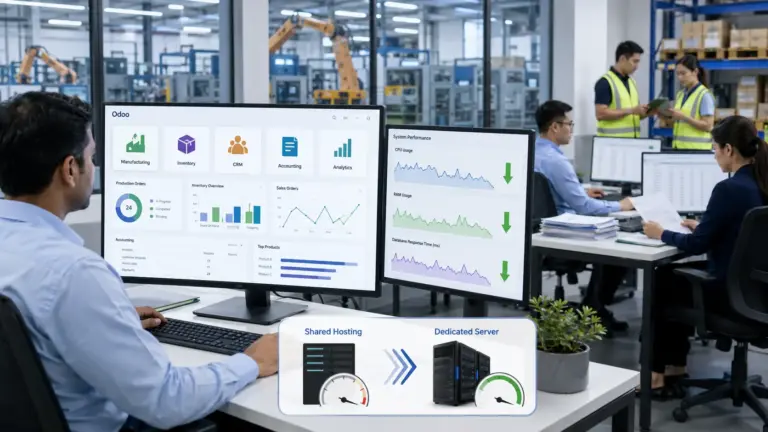


The internet drives global business, but it increases energy use and emissions. A single webpage load produces an average of 0.36 grams of CO2.
Data centres support every website, API, SaaS platform, and cloud service. These facilities consume large amounts of electricity. About 60 percent of the world’s electricity still comes from fossil fuels, which release greenhouse gasses such as carbon dioxide
Green hosting reduces the impact by using renewable energy efficient servers, and optimized data centre practices. Faster hardware, improved cooling, and renewable sourcing lower emissions and conserve resources.
This article explains why high-performance brands are migrating to green dedicated server environments, why it matters, and how your brand benefits from adopting cleaner, more efficient dedicated hosting server environments.
What Is Green Hosting and Why It Matters
Green hosting refers to web hosting services powered by renewable energy sources. Providers commit to minimizing environmental impact through energy efficiency, carbon offsetting, and sustainable practices.
Green hosting companies implement multiple strategies. They use solar and wind power to operate data centers, optimize cooling systems to reduce waste heat. They recycle old servers and components. Some providers participate in carbon offset programs to neutralize remaining emissions.
The goal is to deliver the same (or better) performance while reducing environmental impact and controlling energy costs.
| Aspect | Green Hosting | Traditional Hosting |
| Power source | Renewables | Fossil fuels/limited renewables |
| Carbon footprint | Net-zero/carbon-neutral | High |
| Cooling | Liquid, hot aisle, efficient | Standard AC |
| E-waste | Recycled/resold | Landfilled |
Why Dedicated Servers Benefit the Most From Green Hosting
Dedicated servers are known for stability, high performance, and full control, but they also consume more power than shared or cloud-distributed setups. According to the International Energy Agency (IEA), data centers consumed roughly 460 TWh in 2022, and the global demand is projected to double by 2026 as AI and cloud services expand.
A single dedicated server can consume 500-1200 watts depending on hardware, workload, and cooling systems. When multiplied across thousands of machines, the carbon footprint becomes significant.
1. Lower Operating Costs
Efficient hardware and optimized cooling significantly reduce electricity usage. These savings are often passed on to customers through affordable dedicated hosting plans.
Cost Comparison: Green vs Traditional Dedicated Hosting
| Factor | Traditional Hosting | Green Hosting | Difference |
| Electricity Cost per Server/Month | High (due to inefficient cooling + older hardware) | 20–40% lower | Saves ₹1,500–₹4,000/month |
| Cooling Overhead | 35–45% of total power cost | 10–20% of total power cost | Lower by 2× |
| Hardware Lifecycle | 3 years | 5–7 years | Lower replacement cost |
| Downtime Recovery Costs | Higher (heat-related failures) | Lower | Saves maintenance cost |
2. Improved Performance and Reliability
Green data centers use optimized cooling, advanced monitoring, and high-efficiency hardware. This results in:
- Better uptime
- Lower failure rates
- Faster response times
3. Stronger Brand Reputation
Consumers increasingly prefer businesses that operate responsibly. Sustainable carbon neutral hosting becomes part of a company’s public identity, improving customer trust and loyalty.
4. SEO and Web Performance Benefits
Faster loading times improve user experience and retention.
5. Compliance With Global Sustainability Standards
Regions like the EU, UK, and US have strict upcoming environmental regulations for digital infrastructure. Green hosting helps businesses remain compliant with evolving requirements.
Sustainable servers not only reduce emissions but can also deliver better performance and lower operating costs.
Under the Greenhouse Gas (GHG) Protocol, the energy your hosting provider burns does not vanish; it becomes your organization’s Scope 3 Emissions (Category 1: Purchased Goods and Services).
With the Corporate Sustainability Reporting Directive (CSRD) now active, companies operating in or selling to the EU must report detailed sustainability data. A “dirty” data center becomes a liability in your supply chain audit. Switching to a green dedicated provider that offers Scope 3 pass-through data (verifiable emissions reports) reduces your compliance burden instantly.
How Green Hosting Works
Green hosting involves multiple layers of innovation:
1. Renewable Energy Powering Data Centers
True green providers don’t just offset carbon; they eliminate it. Top-tier data centers operate on 100% renewable-powered grids utilizing:
- Solar farms (often on-site or adjacent)
- Wind energy (via Power Purchase Agreements)
- Hydroelectric power (common in Nordic and Canadian data centers)
- Geothermal sources (providing constant baseload power)
2. Energy-Efficient Hardware
Modern hosting dedicated servers utilize hardware specifically engaged to reduce power draw without sacrificing throughput.
- Storage: NVMe SSDs use 80–90% less power than HDDs while delivering 10× faster throughput.
- Power Supplies: 80+ Titanium-rated PSUs ensure 96% of grid power reaches the server components, minimizing heat loss.
- Processors: Using ARM-based chips (like Ampere) or AMD EPYC Milan/Genoa processors optimized for high performance-per-watt.
- BIOS Tuning: Disabling unused ports and optimizing C-states (sleep modes) at the BIOS level.
3. Advanced Cooling Techniques
Cooling accounts for nearly 40% of a traditional data center’s energy bill. Green hosting employs radical new cooling architectures to slash this number.
- Hot & Cold Aisle Containment: By physically separating the cool air intake from the hot air exhaust, data centers prevent air mixing, allowing cooling units to run more efficiently.
- Free Cooling: In cooler climates, data centers open the vents and use filtered outside air, turning off compressors for up to 80% of the year.
- Immersion Cooling: The gold standard for 2025. Servers are submerged in a thermally conductive, non-conductive liquid. This captures 100% of server heat and eliminates the need for fans entirely, reducing server energy consumption by 20% instantly.
Comparative Efficiency of Cooling Methods:
| Cooling Method | Energy Reduction | Mechanism |
| Free Cooling | 20–40% | Uses outside ambient air; compressors remain off. |
| Liquid Cooling | Up to 45% | Direct-to-chip liquid loops remove heat at the source. |
| Immersion Cooling | 50–90% | Submerging hardware in dielectric fluid eliminates fans. |
| Aisle Containment | 20–30% | Prevents hot/cold air mixing to maximize airflow efficiency. |
4. The Metrics That Matter
Green hosting transcends simple marketing claims. It requires rigorous tracking of specific efficiency metrics:
- PUE (Power Usage Effectiveness): A measurement of efficiency. Green hosts aim for < 1.2.
- CUE (Carbon Usage Effectiveness): Tracks Scope 1 (direct), Scope 2 (purchased electricity), and Scope 3 (supply chain) emissions.
- WUE (Water Usage Effectiveness): Critical for drought-prone areas, ensuring cooling doesn’t waste millions of gallons of water.
5. Recycling & Circular Hardware Economy
Sustainable hosting extends beyond electricity. It addresses the physical waste of the IT industry.
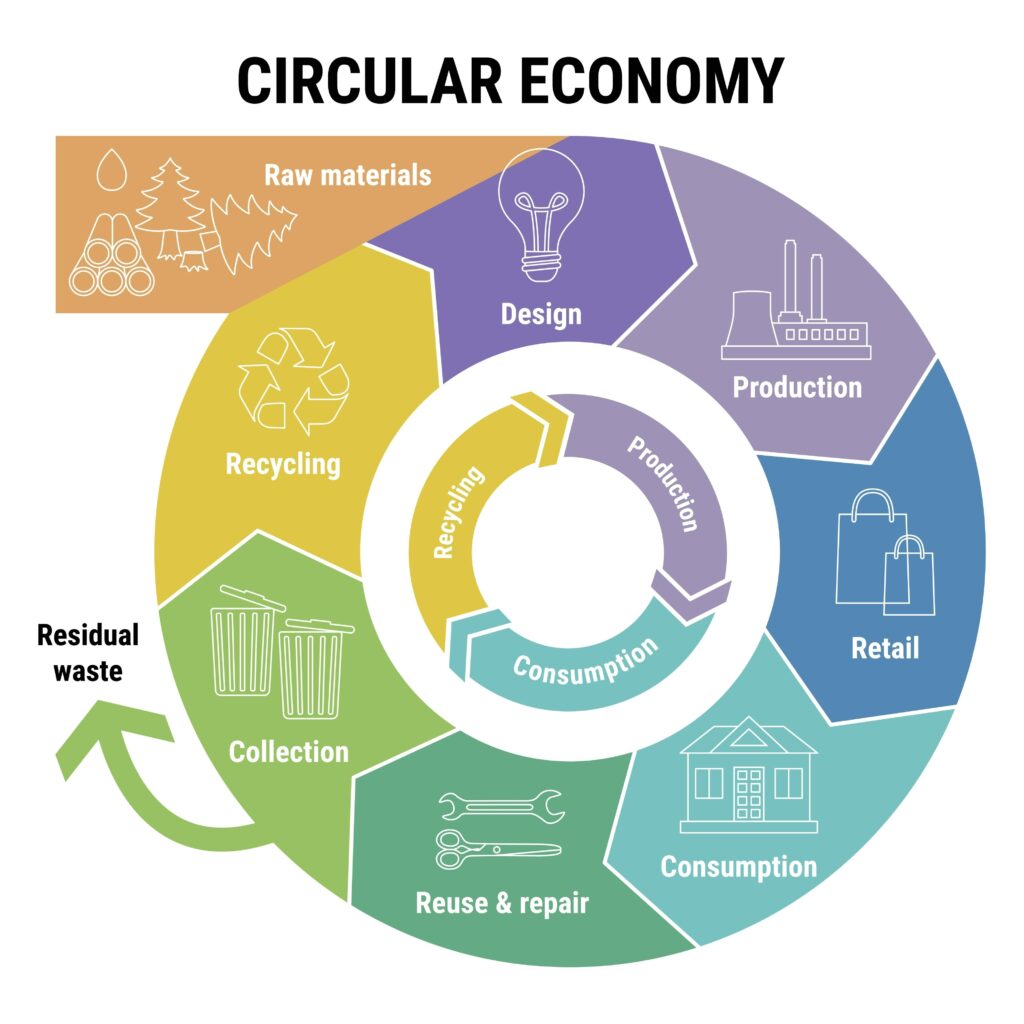
Instead of sending servers to the landfill after 3 years, green providers engage in a Circular Economy:
- Refurbish: Extending server life to 5–7 years for non-critical workloads.
- Repurpose: Turning old compute nodes into storage backup servers.
- Recycle: Recovering precious metals (gold, copper) from motherboards when the hardware is truly dead.
Latest Trends Shaping the Future of Sustainable Hosting
The green hosting industry is evolving quickly as data demands increase and environmental standards tighten. Here are the major trends shaping the future of sustainable dedicated server environments:
1. Rapid Adoption of Renewable Energy-Powered Data Centers
More providers now operate fully or partially on solar, wind, or hydroelectric grids. Major markets like the EU and US have introduced incentives that support renewable-powered hosting facilities.
2. AI-Driven Energy Optimization
AI models are increasingly used to manage server loads, optimize cooling, and predict peak usage. This reduces wasted compute cycles and ensures each watt delivers maximum output.
4. High-Efficiency Chipsets
Servers, along with energy-efficient EPYC and Xeon processors, deliver more performance per watt. They enable hosting providers to scale without proportional increases in power use.
5. Carbon-Neutral and Carbon-Negative Hosting Models
Many hosts are moving beyond offsetting carbon emissions to achieving carbon-negative operations through carbon-capture partnerships, renewable energy microgrids, and sustainable hardware sourcing.
6. Demand for Green Certifications
Businesses increasingly look for hosting partners with certifications such as:
- ISO 14001 (Environmental Management)
- LEED-certified data centers
- Energy Star hardware
These certifications validate sustainability claims and improve trust.
How to Choose the Best Dedicated Server Configuration
Selecting a green dedicated server requires a two-step approach: first, right-sizing your hardware to avoid energy waste, and second, vetting the data center’s operational efficiency.
Step 1: Internal Configuration (Right-Sizing)
The most common cause of energy waste is over-provisioning. A server sitting at 5% utilization still consumes 40-50% of its peak power.
1. CPU Architecture
- General Web/App: Opt for modern ARM-based processors (like Ampere Altra). They offer nearly identical throughput to x86 chips but consume 20–30% less power.
- AI/ML: Use dedicated GPU-optimized nodes. A single GPU can handle math-heavy loads faster and more efficiently than a rack of CPUs churning at 100%.
- Databases: Prioritize High-Frequency cores over core count. Faster completion of queries allows the CPU to return to a low-power “idle state” quicker.
2. Storage:
- Speed: 4–5x faster I/O means tasks finish faster, reducing active power time.
- Efficiency: NVMe drives consume 0.08W idle vs. 5–8W for HDDs.
- Heat: Lower heat generation reduces the load on the data center’s cooling system.
3. RAM: The “Just Enough” Rule RAM consumes power just to hold data, even if that data isn’t being used.
- Standard Web: 16–32GB is sufficient.
- E-Commerce: 32–64GB to cache catalogs in memory.
- Avoid: “Future-proofing” with 128GB+ unless you have immediate plans to use it.
4. Network Throughput & Security Data movement requires electricity. Efficient routing saves power.
- Bandwidth: Match port speed (1Gbps vs. 10Gbps) to actual need.
- Security: Choose dedicated hosting with advanced security and firewall management. Blocking bot traffic at the perimeter firewall prevents your CPU from wasting watts processing malicious requests.
Step 2: External Vetting (The Green Checklist)
Once you have your specs, ask your provider these specific questions.
5. Ask for the PUE (Power Usage Effectiveness) This is the industry standard for efficiency. It measures how much power goes to your server vs. the cooling/lighting.
- 2.0+: Inefficient (1 watt wasted for every 1 watt used).
- 1.5: Industry Average.
- < 1.2: Excellent (Green Standard).
6. Verify Energy Sourcing Do not accept “we are green” as an answer. Demand specifics:
- “Do you use Power Purchase Agreements (PPAs) to fund new renewable generation?”
- “Are you 100% matched with Renewable Energy Certificates (RECs)?”
7. Hardware Lifecycle (E-Waste) A truly sustainable provider doesn’t trash hardware every 3 years. Look for:
- Extended Lifecycles: Providers who support hardware for 5–7 years.
- Certified Recycling: Partners who comply with the R2v3 or e-Stewards standard for responsible recycling.
8. Certifications to Look For
- ISO 14001: Proves they have an environmental management framework.
- ISO 50001: Specific to energy management efficiency.
- LEED / BREEAM: Certifies the physical data center building is eco-friendly.
Importance of Uptime and Monitoring in Dedicated Hosting
High uptime is not just about performance; it directly impacts sustainability.
Downtime leads to:
- Restart cycles
- Heavy resource spikes during recovery
- Increased carbon footprint due to inefficient load handling
24/7 monitoring prevents this. Key systems include:
- Predictive failure analysis (e.g., SMART monitoring)
- Real-time server health alerts
- Application performance monitoring (APM)
- Power and temperature monitoring
Most green hosts guarantee 99.95%-99.99% uptime using optimized infrastructure.
Dedicated Hosting with Advanced Security and Firewall Management
Security and sustainability are interconnected. Attacks like DDoS can cause massive resource waste, overheating, and unnecessary compute cycles.
Green, secure dedicated hosting includes:
- Firewall management with minimal CPU overhead
- DDoS protection with efficient filtering
- Intrusion detection systems (IDS)
- Hardware-level encryption (AES-NI)
- Resource throttling under load attacks
This avoids wasted bandwidth and hardware strain.

Customizable Dedicated Hosting for Software Developers
Green hosting benefits developers directly. With customizable dedicated servers, developers can:
- Choose optimized hardware tuned for low energy consumption
- Use containerization (Docker/Kubernetes)
- Deploy only the necessary services
- Build energy-efficient CI/CD pipelines
- Manage infrastructure through automation (Terraform, Ansible)
Examples of developer-focused configuration options include:
- NVMe-based build servers
- GPU nodes optimized for power-efficient workflows
- Minimal OS setups eliminating unnecessary services
- Energy-optimized VM stacks
This flexibility improves performance and sustainability.
Developers can reduce energy usage by up to 50% by switching high-compute microservices from interpreted languages (Python) to compiled languages (Rust/Go) and utilizing Tickless Kernels to allow CPUs to idle more effectively.
Kernel Tuning
Standard Linux kernels wake the CPU hundreds of times per second (ticks) to check for tasks, even when idle. This prevents the processor from entering deep sleep states.
- Configure your dedicated server with a Tickless Kernel (
NO_HZ_FULL). This allows the CPU to remain in deep sleep (C6 state) for longer periods during micro-idles, reducing idle power draw by up to 20%.
Compiler Efficiency: Rust vs. Python
Your language choice impacts your carbon footprint.
- The Data: Rust and C are the most energy-efficient languages, capable of running complex algorithms with ~50% less energy than Java and nearly 98% less than Python.
- The Strategy: For high-volume background workers or data ingestion services, migrating from Python to Rust cuts your compute energy costs in half.
Cloud Dedicated Server vs Bare Metal Hosting
| Category | Cloud Dedicated Server | Bare Metal Dedicated Server |
| Performance | Virtualized, flexible | Raw hardware performance |
| Scalability | Easy to scale | Limited by physical hardware |
| Energy Efficiency | Higher due to shared virtualization | Moderate – depends on hardware efficiency |
| Control | High | Maximum control |
| Ideal For | Businesses needing flexibility | High-performance apps, large databases |
| Sustainability | More efficient due to workload distribution | Can be sustainable with green-certified data centers |
There is a common misconception that the “Cloud” is inherently greener. While public clouds are efficient at scale, they suffer from the Hypervisor Tax.
When you rent a “Cloud Dedicated Server,” a software layer (the hypervisor) sits between your OS and the hardware. This hypervisor can consume 5–15% of CPU cycles just to manage virtualization.
Bare Metal Wins on Sustainability:
- Zero Overhead: 100% of the energy goes to your application.
- No “Noisy Neighbors”: You don’t have to ramp up CPU usage to fight for resources against other users on the same hardware.
- Hardware Control: You get direct access to BIOS/UEFI to tune power management settings (C-states) that are locked away in cloud environments.
How to Detect and Avoid Greenwashing in Hosting
Many providers claim to be “green” without backing it.
Signs Hosting Claims Are Genuine :
A hosting provider is truly green only if it publishes verifiable renewable energy sources, ISO-certified environmental practices, third-party audit reports, and transparent data about energy efficiency and carbon reduction.
Red Flags:
✘ Vague claims like “eco-friendly servers”
✘ No audit reports
✘ No RECs or real renewable sourcing data
✘ No PUE disclosure
✘ No ISO certifications
What to Ask:
- What percentage of your energy comes from renewable sources?
- Do you publish annual sustainability reports?
- Are your data centers ISO 14001 certified?
- What is your current PUE rating?
- Do you use energy-efficient hardware?
Conclusion
Green hosting with dedicated servers represents the future of web hosting. Sustainability aligns with business responsibility, environmental protection, and customer expectations.
Review your current hosting bill. If you see “provisioned” resources that are consistently under 10% utilization, you are paying for waste. Consider consolidating those workloads onto a single, optimized bare metal server to cut both costs and carbon.
Choosing green dedicated web hosting sends a message to customers and stakeholders that your business prioritizes sustainability. Upgrade to eco-friendly dedicated hosting with Ucartz today.
FAQ
Are green dedicated servers slower or less powerful?
No. Green hosting uses high-performance, energy-efficient hardware, often outperforming traditional servers due to better cooling and power optimization.
How do data centers reduce energy usage?
They use renewable energy, liquid cooling, AI load optimization, efficient power supplies, and thermal management systems to minimize waste.
Is green hosting more expensive?
Not usually. Many providers reduce operational costs through efficiency and pass those savings to customers, making pricing comparable or even cheaper.
Does green hosting improve SEO?
Indirectly, yes. Faster servers, better uptime, and optimized energy usage improve site performance , a Google ranking factor.
How do I know if my hosting provider is actually green?
Look for renewable-energy purchase certificates (RECs), ISO 14001/50001 certifications, real-time power usage effectiveness (PUE) data, transparency reports, and data about energy sourcing and efficiency.