
Every weekday morning, the same scene played out. Chairs filled in by 7:40. Latecomers stood along the back wall or leaned in through the side door. And by 8:00, when the daily program began, there were still people who simply weren’t there at all: a member recovering from surgery, a father who’d relocated for work three states away, an elderly member whose knees no longer allowed for the walk from the parking lot.
For a long time, that gap was treated as an unavoidable cost of being a physical community. You show up, or you miss it.
A volunteer on the media team, Priya, who ran the sound board most mornings, started keeping a small notebook by the mixing console. Every time a member called the office asking “is there any way to hear today’s message,” she wrote the date down. After four months, she had 32 entries. Thirty two separate moments where someone wanted in, and the organization had no way to let them in.
Case Study at a Glance
| Before | After | |
|---|---|---|
| Broadcast access | Only people physically present | Available online, live |
| Daily program | Fixed to the physical location | Streamed in real time |
| Remote members | Could only request recordings or information | Could listen live from any device |
| Streaming setup | Existing sound system only | Existing sound system plus Ucartz Radio Hosting with Centova Cast |
| Daily management | No online stream to manage | A volunteer checks the stream as part of the existing setup routine |
| Audience | Primarily local | Local plus remote listeners across states and countries |
| Content delivery | In person only | In person and live audio streaming |
The Problem They Were Facing
| Problem | What it meant |
|---|---|
| Members couldn’t attend physically | They missed the daily program entirely |
| Health limitations | Some members couldn’t travel to the building |
| Relocated members | Former local members lost regular access |
| Work schedules | Some people couldn’t attend at the 8:00 am start time |
| Visitors leaving the area | They had no simple way to keep listening after they left |
| Manual recording | Content would arrive hours later instead of live |
| No online stream | The organization had no real time digital access at all |
The issue wasn’t a lack of interest. It was a delivery problem. The organization already had an audience that wanted to listen. It simply didn’t have a reliable way to reach that audience outside the building.
Why Recording Wasn’t Enough
The team considered recording each session and uploading the file afterward. It seemed like the simplest fix. But when they tested it for a few weeks, something became clear: several listeners specifically said the delay changed how the program felt to them. Knowing the message was happening right now, at the same time as everyone sitting in the room, was part of what made it feel like being present rather than catching up later.
That single observation reshaped the whole project. The value wasn’t only access to the content. It was access to the moment.
Choosing Ucartz Radio Hosting and Centova Cast
The organization didn’t want to build and maintain its own streaming infrastructure, and it didn’t have a technical staff to do so. It needed a practical way to take the audio it was already producing every morning and make it available to remote listeners without adding a heavy new workload to its volunteer team.
They chose Ucartz Radio Hosting with Centova Cast to provide that environment. The existing sound system remained the actual source of the broadcast. Centova Cast radio streaming handled the station management and streaming workflow on top of it, so the organization was streaming its own real audio rather than replacing anything it already had.
How the Setup Worked
Microphone
     |
Existing Sound System
     |
Audio Output
     |
Streaming Setup
     |
Ucartz Radio Hosting
     |
Centova Cast
     |
Live Radio Stream
     |
Phone / Laptop / Browser
     |
Remote Listeners
How the Organization Went Live
Step 1: They assessed the existing setup. The organization already had a microphone, a mixer, speakers, and a working audio routine for the room. Before buying anything new, the team looked at how that existing signal could be reused for streaming.
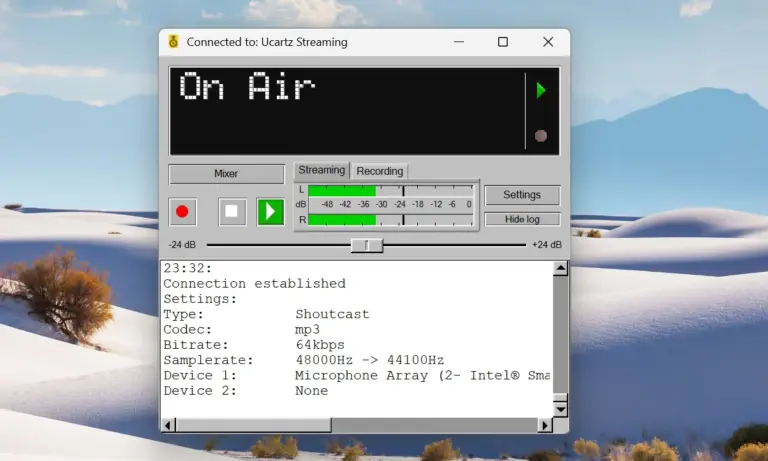
Step 2: They set up the Centova Cast radio station. Centova Cast became the interface for managing the online station, sitting on top of the Ucartz Radio Hosting environment.
Step 3: The audio source was connected to the streaming workflow. The same signal already feeding the room’s speakers was routed into the streaming setup, so no separate recording process was needed.
Step 4: The station was tested before going public. The team checked audio quality, connection stability, listener access, and playback on mobile devices over several trial mornings.
Step 5: The stream went live. Once the workflow held up reliably, the listening link was shared with members.
The first broadcast went out on a Tuesday. Priya has said she checked the listener count more times that morning than she checked the actual sound levels. Four people were listening. One of them was the member recovering from surgery.
Micro Moment: The Member Recovering From Surgery
Before streaming, she couldn’t attend the morning program at all, and the office had no good answer when she asked if there was any way to hear it. After the stream launched, she became one of the very first people listening remotely, from her recovery bed, on the same day the stream went live. Physical attendance was no longer a requirement for staying connected.
Mr. Oduya’s Morning Tea
Two weeks in, an elderly member named Mr. Oduya, who had stopped attending regularly because the early start time was hard on him, sent a message through his daughter. He’d been listening from his kitchen table every morning with his tea, at the actual live time, not a recording. He said it felt like he hadn’t missed a single day. Distance and mobility no longer stood between him and the community.
The Relocated Member
A member who had moved three states away for work said the stream gave him a reason to set an alarm around the program time, because listening live rather than later made it feel like he was still part of the room. Moving away no longer meant losing regular access to the community he considered home.
Six Months After Launch
| Metric | Initial | Month 6 | Change |
|---|---|---|---|
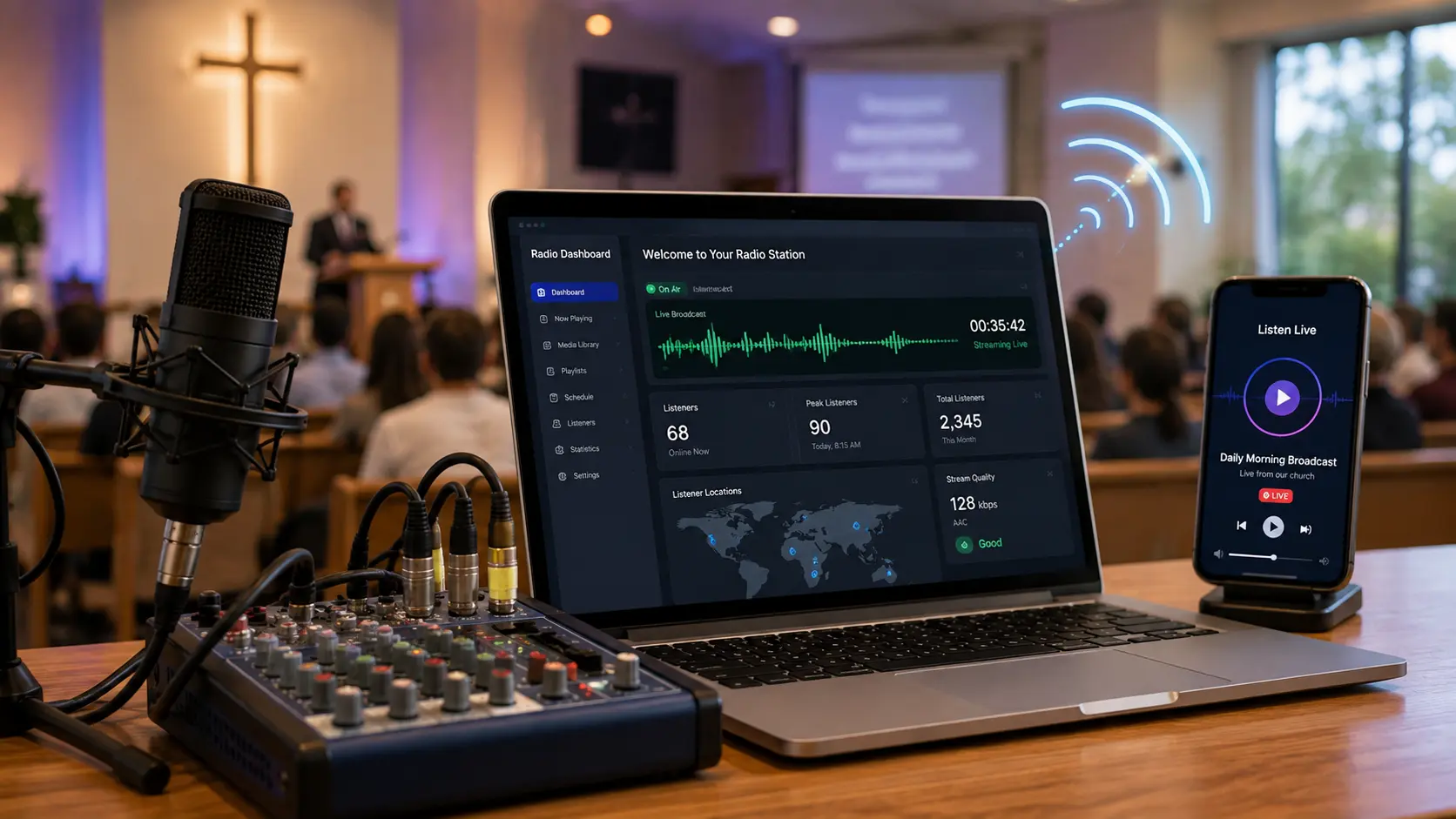
| Concurrent listeners | 12 average | 68 average | +467% |
| Peak concurrent listeners | Not tracked before launch | 90+ | New benchmark |
| Average listening duration | Not tracked before launch | 34 minutes of a 40 minute program | 85% of full program length |
| “Can I hear today’s message” calls | About 8 per month | Nearly zero | Close to a full reduction |
| In person attendance | Baseline | Up about 9% | +9% |
| Geographic reach | Local only | 4 states and 2 countries | Expanded well beyond the building |
These figures are presented here as an illustrative scenario. If this case study is published for Ucartz, these numbers should be verified against a real customer’s actual streaming data before being presented as fact.
The Impact Beyond Listener Count
| Outcome | What changed |
|---|---|
| Accessibility | Members unable to attend could still listen |
| Geographic reach | The broadcast moved beyond the local venue |
| Convenience | Listeners could use their own devices, wherever they were |
| Timeliness | Members could listen live instead of waiting for a recording |
| Volunteer workload | Existing media volunteers managed the stream without new hires |
| Community connection | Remote members stayed genuinely connected rather than drifting away |
Somewhat unexpectedly, in person attendance did not drop once the stream launched. It rose. Several members who started out as remote listeners eventually visited in person, saying the stream had made them feel reconnected enough to want to come back physically.
What Ucartz Helped Solve
The organization wasn’t looking for a complicated broadcasting infrastructure. It needed a reliable online streaming environment, a way to distribute the audio it already produced, a station setup its volunteers could actually manage, and access for listeners outside the physical venue in real time.
Ucartz Radio Hosting with Centova Cast provided the foundation for that workflow, without requiring the organization to hire technical staff or rebuild its existing sound system from scratch.
What the Team Would Tell Others Starting Out
Start with the audio you already have. The organization didn’t need new microphones or a new sound board. The signal already running the room’s speakers was good enough to stream once it was routed through Centova Cast.
Someone has to own it, even loosely. Priya wasn’t officially in charge of the stream, but because she was already at the board every morning, checking that the stream was live became a two second habit rather than a new job.
Don’t assume people want a recording instead of a live stream. The live element mattered more than the team expected going in.
Ask listeners how it actually feels, not just whether the stream works technically. The stories, like Mr. Oduya’s kitchen table tea, are what actually justify the effort to the rest of the team and the wider community.
The Takeaway
The organization didn’t need to reinvent its entire media operation. It already had the microphone, sound system. It already had people who wanted to listen. The missing piece was reliable online delivery.
By adding a streaming workflow through Ucartz Radio Hosting and Centova Cast, the organization turned a broadcast that once belonged only to people inside one building into a live experience accessible to members wherever they were.
And perhaps the most important result wasn’t the listener count. It was the message from someone sitting at a kitchen table with a cup of tea, saying it felt like he hadn’t missed a single day.
Turn your existing broadcast into an online radio station. Start your radio hosting journey with Ucartz.
FAQ
Did the organization need new equipment to start streaming?
No. They used the existing soundboard output that was already feeding the room’s speakers and routed it into Centova Cast through their Ucartz Radio Hosting environment. No new microphones, mixers, or cameras were required for the initial launch.
Who manages the stream day to day?
A volunteer who is already present for the daily program. Once the setup was in place, checking that the stream was active took only a few seconds and fit naturally into an existing routine.
Was there concern that streaming would reduce in person attendance?
Yes, that was an early worry among leadership. In this scenario, in person attendance rose by about 9% over the following six months, as many remote listeners eventually chose to visit in person.
Why did they choose live streaming instead of posting recordings afterward?
Testing showed that listeners valued tuning in at the same time as the in person audience. The delay created by recordings changed how connected people felt, so the team prioritized a live stream through Centova Cast over an after the fact upload process.
What role did Ucartz specifically play in this setup?
Ucartz Radio Hosting provided the hosting environment, and Centova Cast provided the station management and streaming workflow on top of it. Together they let the organization stream its existing audio without building or maintaining separate infrastructure.
Is the stream available as a recording afterward, or only live?
The primary focus has been the live stream, since listeners specifically valued tuning in at the same time as the in person audience. Archived recordings for those who miss the live time is a future step the organization has discussed.
How long did it take to notice a real difference in community connection?
Individual stories of reconnection, like the first message from Mr. Oduya’s daughter, started within the first two to three weeks. The broader, measurable shifts in attendance and listener retention became clear over the following four to six months.