
Case Study
The idea of starting a campus radio station had existed within the college media club for years. Students had created show concepts and recorded early ideas, but limited resources and the complexity of traditional broadcasting prevented the project from moving forward. Aarav kept a folder on his laptop called “Radio Club, Someday.” He had started it in his second year, added a few voice memos, a logo sketch, and a list of show ideas, and then mostly forgotten about it.
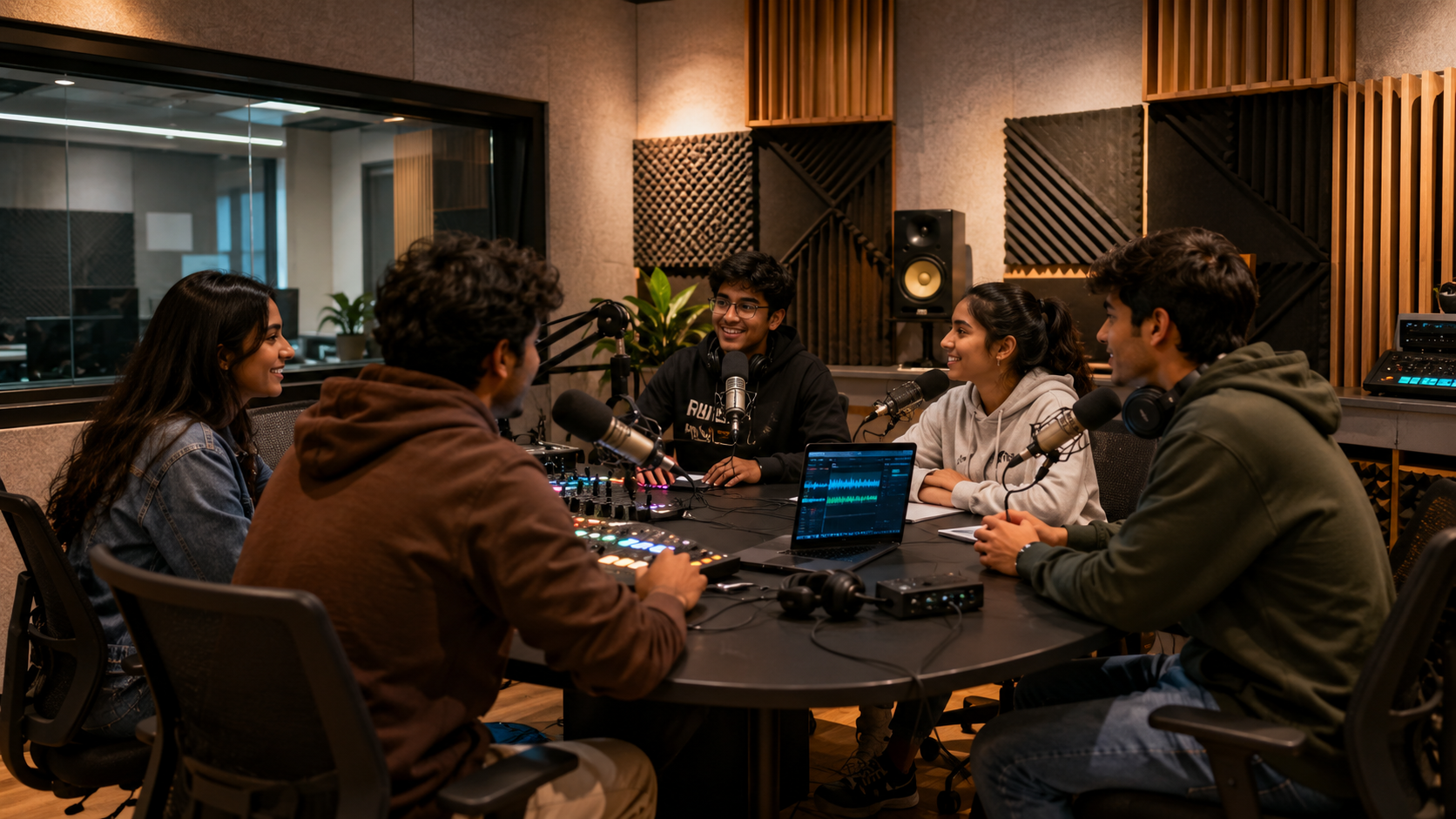
He asked for support & the response surprised him. Eighteen students replied within a day, most of them already active in the college’s dormant radio club, which had 18 members interested in music, campus news, student interviews, sports updates, and cultural events. The college had a small recording room with a couple of decent microphones and basic audio gear, left over from a media production course. What it didn’t have was any way to actually broadcast a show to students.
The original plan, scribbled on a whiteboard in the media lab, was traditional FM broadcasting. That’s where the problems started.
The Problem
Two students spent a week researching what an FM setup would actually require: broadcast equipment, frequency allocation through the right regulatory channel, transmission infrastructure, technical expertise the club didn’t have, and ongoing operational costs that made the whiteboard plan look increasingly unrealistic.
The club’s annual budget, approved by the student council, was ₹75,000. A traditional FM setup wasn’t close to practical at that number.
Aarav’s co-founder, a second-year student named Divya who handled the club’s numbers, put it bluntly during a Thursday planning meeting.
The team realized that investing heavily in traditional FM infrastructure before validating student interest carried unnecessary risk. They decided to test demand first through an online radio model.
That reframed the whole project. The students needed a way to start small and test whether students would actually listen before asking the university for a bigger budget.
The Alternative
Instead of building a traditional FM station, the club decided to launch an online campus radio station. The plan was straightforward: a student presenter speaks into a microphone, broadcasting software sends the signal to Centova Cast internet streaming, and Centova Cast streams it online to students listening from their phones or laptops.
The club could reuse the recording equipment it already owned and stream over the internet instead of the airwaves. That single decision removed most of the infrastructure barrier the whiteboard plan had run into.
The 90-Day Target
Before launch, the team set goals they privately worried were a little ambitious for a college club running on a shoestring budget.
| Goal (First 90 Days) | Target |
| Streaming schedule | 24/7 online |
| Student presenters | 15 |
| Regular weekly shows | 5 |
| Unique listeners | 500 |
| Total listening sessions | 1,000 |
| Participating student clubs | 3 |
They also wanted to keep the initial technology spend low, since most of the ₹75,000 budget was earmarked for microphones, a better pair of headphones, and a small marketing push.
Setting Up the Station
The team chose Ucartz Radio Hosting paired with Centova Cast to manage the station, mainly because none of them wanted to be the person responsible for keeping a streaming server online at 2 AM during exam week. The platform reduced the technical complexity of running an online station, allowing students to focus more on content creation and audience engagement.
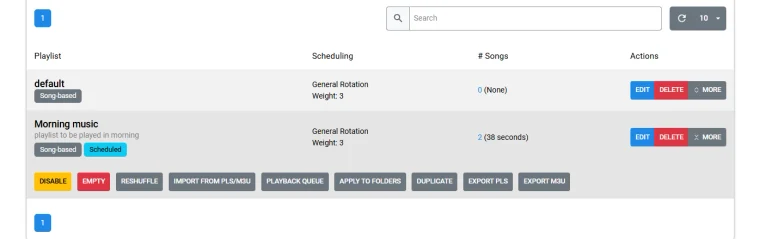
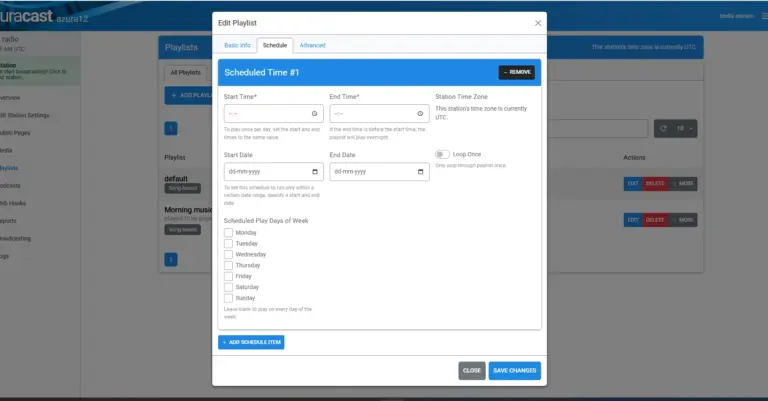
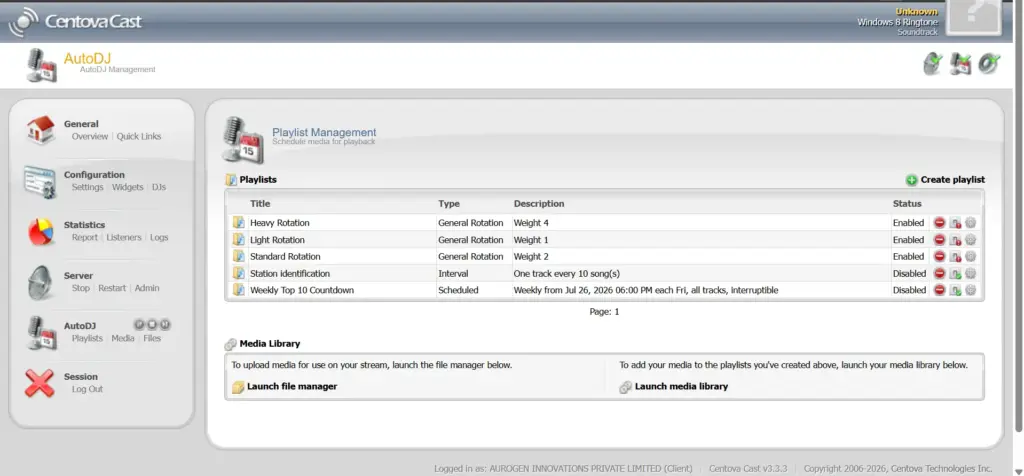
Centova Cast became the station’s control room. From one dashboard, the team managed the live stream, audio file uploads, AutoDJ playlists, scheduled programming, live broadcasting, and basic listener data, without anyone needing to touch a server directly.
Week 1: Building the Content Library
The first week was almost entirely recording and organizing. The team produced 42 music tracks cleared for use, 8 student interviews, 5 campus news segments, 3 sports updates, and 2 event announcements.
The media team uploaded everything to the station and spent two late evenings in the recording room sorting it into playlists, arguing lightly over whether a particular interview clip needed to be trimmed.
Week 2: Setting Up AutoDJ
Nobody could be on air around the clock, so the team built an AutoDJ schedule to keep the station running between live shows.
| Time Slot | Programming |
| 7 AM – 9 AM | Morning Campus Mix |
| 9 AM – 12 PM | Music Rotation |
| 12 PM – 1 PM | Student Voices |
| 1 PM – 4 PM | Afternoon Playlist |
| 4 PM – 6 PM | Campus Updates |
| 6 PM – 8 PM | Live Student Shows |
| 8 PM – Midnight | Evening Music |
When nobody was broadcasting live, AutoDJ quietly kept the station active, which mattered more than the team expected once classes and assignments picked up.
Week 3: The First Live Broadcast
The first live show was scheduled for a Friday evening. Two second-year students, Rhea and Kabir, hosted it from the recording room, connecting their broadcasting software to the Centova Cast stream using the live source details they had tested twice earlier that week, mostly out of nerves.
The first live broadcast marked an important milestone for the team. Listener activity during the session provided early validation that students were interested in the concept.
Something did happen.
The First Problem Nobody Expected
The team had planned for roughly 50 listeners on launch night. Instead, the announcement spread through WhatsApp groups, hostel chats, and a few enthusiastic posts from club members’ personal accounts.
Within the first hour, 137 students had tuned in. The team was surprised by the immediate response during the first live broadcast, as listener activity quickly exceeded their initial expectations.
The first broadcast generated strong interest from students, encouraging the team to continue expanding the station’s programming and improving the listener experience.
Early Growth and Engagement
The team kept publishing weekly shows, adjusting the schedule as more students volunteered to present. By the end of the first month, the numbers had moved well past the original plan.
| Metric | Result |
| Active student presenters | 18 |
| Weekly shows | 7 |
| Unique listeners | 1,840 |
| Total listening sessions | 4,900 |
| Average listening time | 34 minutes |
| Student clubs involved | 6 |
| Recorded programs | 76 |
Students had stopped treating it as a side project. People were messaging the club’s Instagram page requesting specific shows, and students began sharing the station within campus communities, providing feedback on programming preferences.
The Unexpected Audience
A few weeks in, the club noticed something in the listener data that nobody had planned for. Not everyone tuning in was a current student.
As awareness increased, interest expanded beyond current students. Alumni and students studying away from campus also began engaging with the station’s content. A few parents mentioned listening to the campus news segment to keep up with what their kids were up to. Students who had gone abroad for exchange semesters tuned into the cultural programs, partly for the content and partly, Aarav suspected, out of homesickness.
By the end of Month 3, listener data showed activity from India, the UAE, Qatar, the United Kingdom, and Canada. A campus project had picked up an audience well outside the campus gates.
Three-Month Progress
After 90 days, the team sat down and compared the original targets against what actually happened.
| Metric | Original Target | Actual (90 Days) | Change |
| Unique listeners | 500 | 4,700 | +840% |
| Listening sessions | 1,000 | 13,200 | +1,220% |
| Average listening time | 31 min | 38 min | +23% |
| Weekly shows | 5 | 11 | +120% |
| Student presenters | 15 | 26 | +73% |
| Participating clubs | 3 | 9 | +200% |
| Geographic reach | Campus-focused | 7 countries | – |
The Cost Difference
The original FM concept would have required the club to price out a far more complex broadcast setup, likely well beyond the ₹75,000 annual budget once regulatory and transmission costs were added in.
The online model let the team launch using infrastructure they already owned: microphones, laptops, recording equipment, and the campus internet connection. The main new expense was the online radio hosting itself, which let the club go live without ever investing in traditional FM transmission equipment.
What Centova Cast Changed
For a student-led team managing academics alongside broadcasting, having simple operational tools was essential. The ability to schedule content, manage broadcasts, and monitor activity helped the team maintain consistency.
Students managed the entire station through a web-based control panel, without needing to be live every hour. They could upload recorded audio, build playlists, schedule programming in advance, run AutoDJ during class hours, broadcast live in the evenings, and check listener numbers from a phone between lectures.
That meant the station kept running even when every single member was sitting in a lecture hall.
The Biggest Lesson
The project showed that launching a campus radio initiative did not require traditional broadcast infrastructure. By combining existing equipment, online streaming technology, and student participation, the team was able to create a practical alternative.
What they actually needed was content, presenters, a microphone, internet access, online radio hosting, and a streaming control panel. Centova Cast gave the students the operational control to run the station day to day, while Ucartz handled the hosting infrastructure behind the stream.
Learn more about the fundamentals of online radio streaming, hosting requirements, and the tools needed to launch a successful internet radio station in this complete online radio hosting guide.
The Final Outcome
Following the initial success of the initiative, the university explored ways to continue supporting the student radio project as a long-term campus activity.
| Metric | Six-Month Result |
| Active student presenters | 32 |
| Weekly programs | 14 |
| Participating student clubs | 9 |
| Unique listeners | 8,700+ |
| Listening sessions | 27,000+ |
| Average listening time | 41 minutes |
| Countries reached | 11 |
The club began broadcasting university events, student interviews, cultural programs, and special campus announcements, effectively becoming the university’s unofficial live coverage team for anything happening on campus.
What started as a question typed into a WhatsApp group, whether a handful of students could run their own radio station, became a functioning online broadcasting platform with a a broader online listener community beyond the immediate campus audience. And they did it without ever building an FM broadcast tower.
The Technology Behind the Station
- Centova Cast: radio station management and control panel
- AutoDJ: automated music and recorded programming
- Live broadcasting software: for live student shows
- Microphone and laptop: the student presenter setup
- Web player: how listeners tuned in from phones or computers
- Ucartz Radio Hosting: hosting infrastructure for the online radio stream
Want to launch a college or community radio station? Start with the infrastructure you already have. With Ucartz Radio Hosting and Centova Cast, student teams can create, manage, and broadcast an online radio station without building traditional FM transmission infrastructure.
FAQ
Do you need an FM license to run a station like this?
No. An online radio stream through hosting and a platform like Centova Cast does not require FM frequency allocation, which is one of the main reasons student and community groups often start there before considering traditional broadcast.
What is Centova Cast, and what does it actually do?
Centova Cast is a web-based control panel for managing an online radio stream, including uploading audio, building AutoDJ playlists, scheduling programming, running live broadcasts, and viewing basic listener statistics, all without needing to manage a streaming server directly.
How much technical knowledge does a student team need to run this kind of station?
Very little beyond basic computer literacy. Most of the setup involves uploading files, building playlists, and connecting broadcasting software to a stream using connection details provided by the hosting platform.
Can a station like this run when nobody is broadcasting live?
Yes. AutoDJ plays pre-scheduled music and recorded programming automatically whenever there is no live broadcast, which is what let this station stay active around the clock without needing round-the-clock presenters.
What does online radio hosting typically cost compared to FM setup?
Costs vary by provider and plan, so exact pricing should be confirmed directly with the hosting provider. Directionally, online radio hosting tends to require a much smaller upfront investment than FM transmission equipment and regulatory processes, which is the main reason smaller teams and clubs often start there.
Can listeners outside the campus actually access the stream?
Yes. Since the stream is delivered over the internet rather than FM airwaves, anyone with the stream link or web player, anywhere with an internet connection, can listen, which is how this station picked up listeners well beyond its home campus.