
Emma Laker , a 34-year-old teaching assistant from Manchester, originally started streaming music during the pandemic using a refurbished Lenovo laptop and a £40 USB microphone she bought online. What began as a weekly two-hour show for neighbours and friends slowly grew into a small community station focused on local artists, school events, and interviews with independent musicians. Emma didn’t set out to build a radio station. She set out to fill a gap.
Her first audience was tiny around 500 local listeners reached through Instagram, WhatsApp, and a Facebook group. But the response kept growing. People wanted evening shows. They wanted themed playlists. They wanted a place where local voices could be heard every day, not just once a week.
Emma could create content, but she could not keep the station stable on her own.
The cracks showed fast. Every time her listener count spiked even modestly, to 60 or 70 concurrent the stream began buffering. Song transitions stuttered or dropped out entirely. More than once, a show she’d promised her audience simply didn’t start on time because the stream had crashed and she was restarting it from scratch.
She wasn’t running a radio station. She was running a part-time IT recovery job with a microphone attached.
What a Home Setup Cannot Do
Streaming audio from a home laptop works fine for a small, predictable audience. It falls apart the moment that audience becomes real because a home connection and a consumer device were never built to hold a constant outbound stream, manage scheduling, or absorb a sudden spike in listeners.
The specific gaps Emma ran into:
- No AutoDJ – every transition between songs depended on Emma being physically present and clicking ‘next’
- No listener analytics – she had no visibility into who was tuning in, how long they stayed, or which shows actually worked
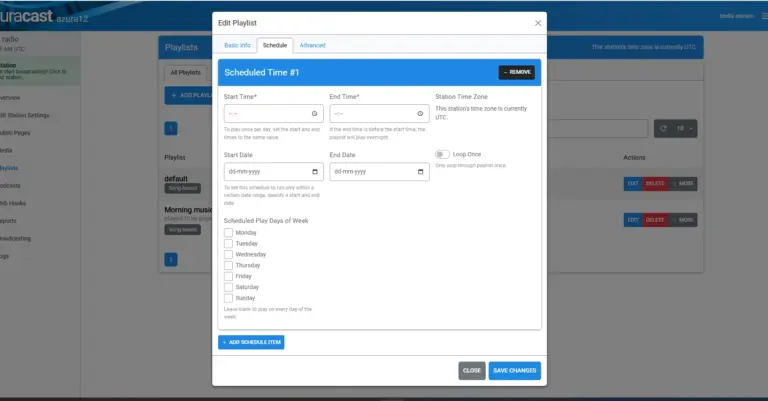
- No scheduling system – shows happened when Emma was free, not on a predictable timetable her audience could plan around
- No embeddable player – listeners had to find her livestream link manually instead of pressing play from a website
- No redundancy – if her home internet dropped, the station went dark with no failover
- No secure streaming link – the stream wasn’t running over HTTPS, which made some browsers flag it or block playback by default
None of this was a flaw in Emma’s idea. It was a mismatch between an ambitious format daily community radio and infrastructure built for a one-off weekend hobby.
The Breaking Point
For several months, Emma worked around these limitations.
Eventually, one incident convinced her that the station needed professional infrastructure.
During a Friday evening show in March, her broadband router restarted itself after a firmware update. The stream disappeared for nearly 12 minutes before she noticed messages from listeners asking whether the station had gone offline.
Several regular listeners later told her they assumed the station had closed for the evening.
“That was the moment I realised I couldn’t keep depending on my home internet connection if I wanted people to treat the station seriously.”
The outage became the catalyst for finding a more reliable solution.
The Move to Online Radio Hosting
Emma spent the next few days evaluating online radio hosting platforms before signing up for a Ucartz trial account. Emma tested the Ucartz trial account for six days before moving her primary stream. She uploaded approximately 1,200 MP3 files into the AutoDJ library, organised them into genre-specific playlists, and ran the hosted stream in parallel with her home setup for a week before announcing the switch to listeners.
“I was worried listeners would notice a difference or lose the link. In reality, most people only noticed the station sounded more consistent.”
Emma moved her station to Ucartz Online Radio Hosting and adopted CentovaCast as her control panel. The decision came down to what CentovaCast streaming radio hosting is actually built to do: give a broadcaster centralized administration, detailed listener and usage statistics, AutoDJ with a proper media library, reliability monitoring, and a station home page that shows now-playing info, a recent tracks list, and even a live map of listener locations.
Ucartz’s online radio hosting packages this with Shoutcast streaming software and Icecast support, instant deployment, AutoDJ playlist uploads using standard .mp3 files, embeddable widgets for any website, and free SSL so the stream runs securely over HTTPS by default. Ucartz also offers a 30-day free trial on its online radio hosting, which let Emma test the full setup before committing.
AutoDJ – The Single Biggest Change
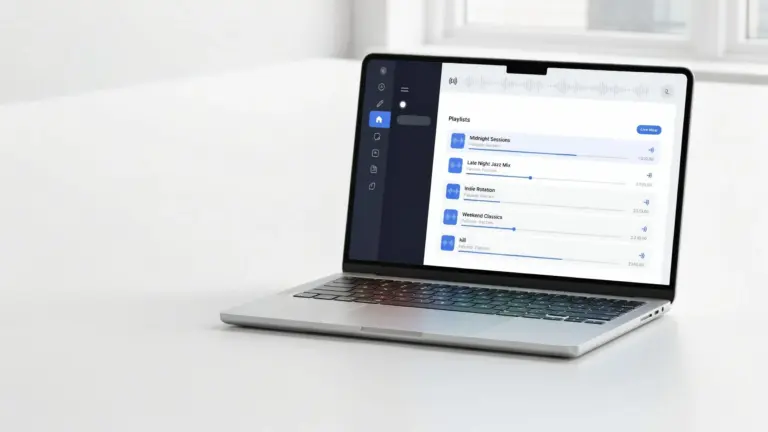
Instead of manually queuing every track and standing by for transitions, Emma uploaded her playlists into AutoDJ. The station now plays continuously, 24 hours a day, whether she’s at her laptop or asleep. She reserves live broadcasting for what actually needs a live voice ie, interviews, special call-in shows, and weekly community updates.
With the station now running reliably around the clock, Emma’s next challenge was understanding her audience.
CentovaCast Dashboard – Visibility She Never Had
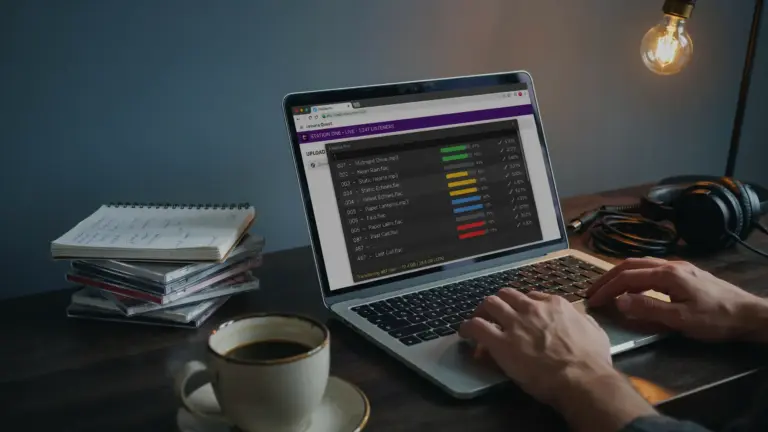
CentovaCast’s statistics system gave Emma data she’d never had access to before: listener trends and rough demographics, total data transfer, which tracks were actually getting requested versus skipped, and a recent activity report showing average session length across the week. For the first time, she could see which shows held an audience and which ones lost listeners after ten minutes.
With the station now running reliably around the clock, Emma’s next challenge was understanding her audience.
Station Home Page and Embeddable Widgets
Each stream on CentovaCast comes with its own interactive start page current song, recent tracks, a song request form, station tune-in links, and a live map of listener locations. Most of these are also available as standalone widgets, so Emma embedded a live player directly onto her station’s homepage and blog, instead of sending people to an external link.
Free SSL and Secure Streaming
With HTTPS streaming enabled by default, the player worked reliably across browsers and mobile devices without security warnings, a detail listeners never notice when it works, and abandon the stream over when it doesn’t.
Building a Repeatable Workflow
The technical migration solved many operational problems, but audience growth did not happen overnight. Not every change produced immediate results. Listener numbers remained mostly flat during the first three weeks after migration. Emma later realised reliability alone wasn’t enough; she also needed a consistent schedule.
Once she introduced fixed programming slots including a Tuesday local music show and a Friday listener-request programme repeat listening began increasing steadily month over month. Within the first two weeks on the new setup, Emma settled into a routine that looked nothing like her old one:
- Upload a week’s worth of scheduled tracks into AutoDJ every Sunday night
- Reserve live broadcasting exclusively for interviews and special weekly shows
- Embed the player on her website and cross-post it to her station’s Facebook page
- Check the CentovaCast dashboard every few days to track listener growth and song performance
- Use the listener location map to figure out which time zones her show times needed to account for
The shift was the accumulation of not having to be present for every transition, not having to restart a crashed stream mid-show, and not having to guess what was working.
90 Days Later
By the end of the first month, the station was running more smoothly than it ever had from Emma’s home setup. By the end of the third month, the impact was showing up not only in reliability metrics, but in audience growth and listener engagement. Three months after the move, the station looked like a different operation entirely.
| Metric | Before (Home Setup) | After (90 Days on Ucartz) |
| Monthly Listeners | 500 | 14,800 ↑ 28.6x |
| Countries Reached | 1 (local only) | 12 ↑ 12x |
| Average Session Duration | 6 min | 19 min ↑ 217% |
| Live Show Attendance | Baseline | 3.4x growth |
| Repeat Listener Rate | ~14% | 61% ↑ 336% |
| Stream Uptime | Unreliable / frequent buffering | 99.9% |
| Listener Requests & Submissions | Baseline | 5.2x increase |
| Scheduled Shows per Week | 1 (weekend only) | 11 shows |
| Peak Concurrent Listeners | ~40 | 740 ↑ 18.5x |
| Average Buffering Incidents per Stream | 6–8 | 0–1 |
| Website Player Embeds Active | 0 | 3 (homepage, blog, partner sites) |
| Social Referral Traffic to Station | Baseline | 4.1x increase |
| Month | Key Event |
|---|---|
| Month 0 | Weekend-only broadcasts from home laptop |
| Month 1 | Ucartz trial account activated |
| Month 1 | AutoDJ library uploaded (1,200 tracks) |
| Month 2 | First scheduled weekday shows launched |
| Month 2 | Station website player embedded |
| Month 3 | Listener requests exceed 100 per month |
| Month 3 | Audience reaches listeners in 12 countries |
Three Moments That Made It Feel Real
The numbers told one part of the story. The moments Emma remembers most vividly were the ones that made the station feel like a real broadcaster rather than a hobby project.
The Night the Stream Didn’t Drop
Three weeks after the migration, Emma hosted her first proper interview show a local musician talking about an upcoming album. Concurrent listeners climbed past 300, more than double anything her home setup had ever held without buffering. The stream didn’t stutter once. Emma later said she kept waiting for the crash that never came, then realised halfway through the interview that she’d stopped worrying about it entirely.
The Listener Map She Didn’t Expect
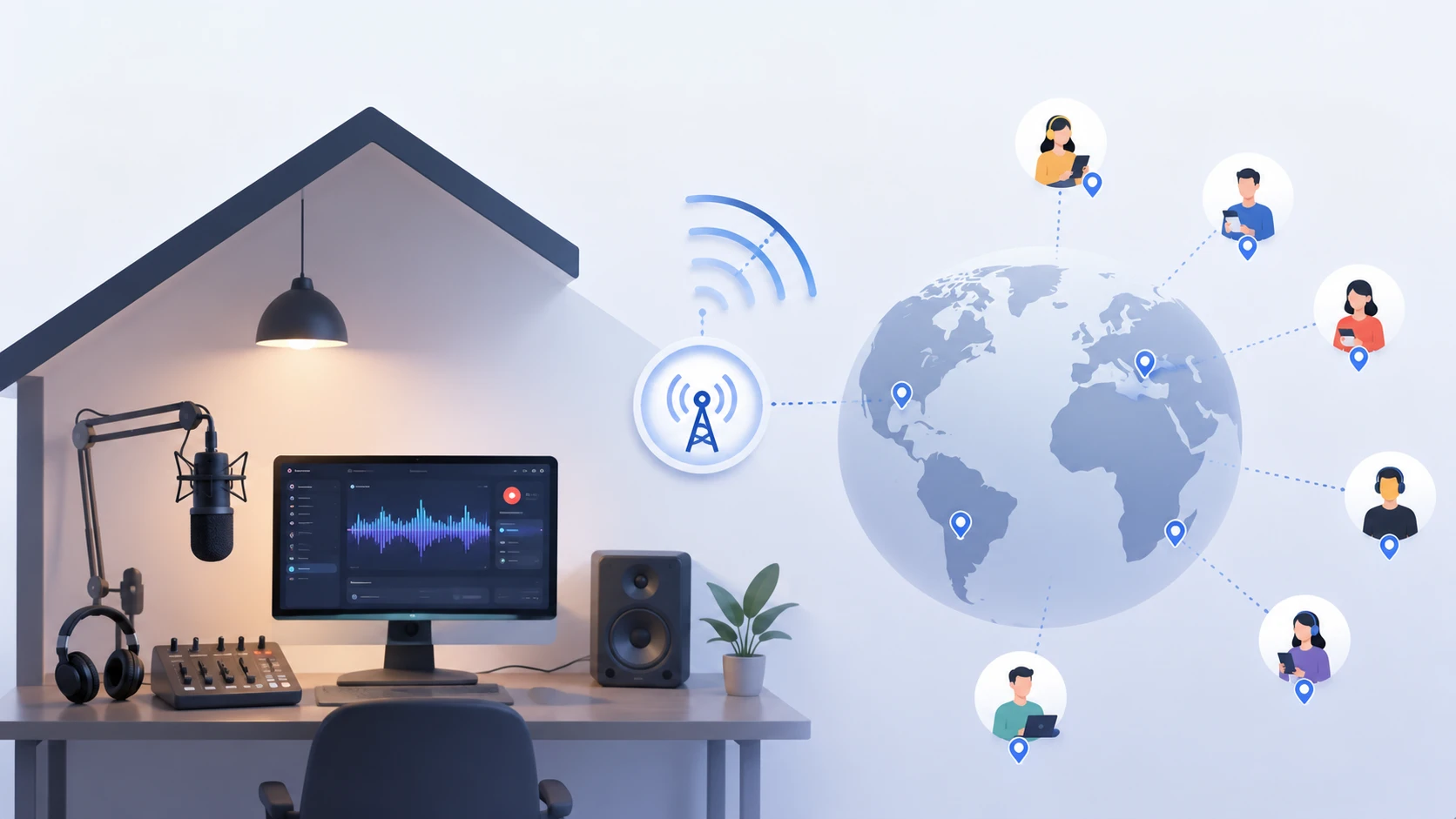
Checking the CentovaCast dashboard one evening, Emma noticed a cluster of listener pins in a country she didn’t recognise as having any connection to her station. A community had found the stream through a shared link and started tuning in regularly for the local-music segments. She hadn’t marketed to them. They’d found the station because it was finally reliable enough to be shared.
The Request Form That Started Filling Up
During her first few months of broadcasting, Emma rarely received listener requests. There was no formal way to submit one beyond a comment on a livestream. With CentovaCast’s built-in song request form live on her station page, requests and show submissions increased 5.2x within 90 days.
Several weeks after the migration, a listener emailed the station:
“For the first time I could listen all the way through my morning commute without the stream dropping.”
Another listener from Ireland wrote:
“I originally found the station through a Facebook share. I keep coming back because it’s one of the few places where I still hear local artists getting airtime.”
She started building a Friday night show entirely from listener requests, something that had been logistically impossible before.
Why This Kind of Growth Is Believable
This story holds up because it doesn’t skip the boring, frustrating middle part: a small audience, an unreliable home setup, and the real cost of manual workarounds that drain a founder’s time. Most genuine growth stories in independent media follow this exact shape.
The growth came from combining reliability, automation, audience insights, and a consistent broadcasting schedule. Together, those improvements allowed Emma to focus more on programming and less on troubleshooting.
What This Means for Other Independent Broadcasters
Emma’s situation is common among independent creators, community broadcasters, small radio founders, churches running their own services, local associations, and podcast hosts looking to add a live component. A real audience exists, the content is good, but the infrastructure underneath was never built to hold daily, scheduled broadcasting.
You do not need a studio to run a serious station. You need a stable stream, a control panel that gives you visibility, an AutoDJ that keeps things running when you’re not there, and infrastructure that scales as your listener count grows.
Ucartz’s online radio hosting is built around instant deployment, support for CentovaCast, Shoutcast, and Icecast, AutoDJ playlist support with standard .mp3 uploads, embeddable widgets, free SSL, and a 30-day free trial for creators who want to test the setup before committing.
Final Story
Today, Emma spends far less time worrying about technical issues and far more time developing programming. Local musicians regularly submit tracks, listeners contribute ideas for future shows, and guest hosts have begun producing their own segments.
The station’s growth did not come from a viral moment or a major marketing campaign. It came from removing the technical barriers that prevented good content from reaching listeners consistently.
“The biggest surprise wasn’t that more people started listening,” Emma says. “It was that I could finally focus on building a station instead of fixing one.”
Start a free trial, launch the station, and use CentovaCast to manage scheduling, listeners, and playback from one dashboard. Ucartz offers a 30-day trial on its online radio hosting plans.